Robin's windy afternoon
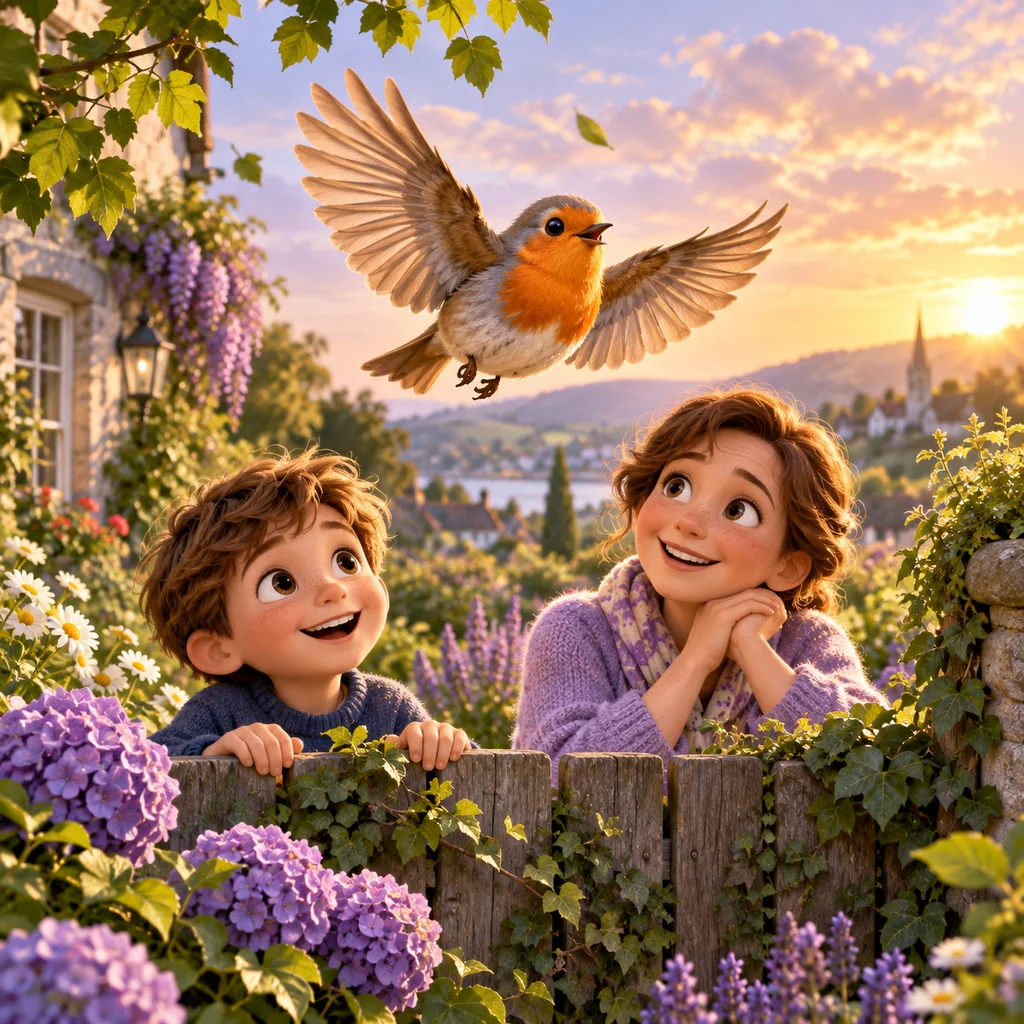
ArobinlandedonthegardenfencewhileBenwasdrawingatthetable.Thebirdtilteditshead,flickeditstail,andflewaway.Ben'spencilstoppedhalfwaythroughacircle.‘Itdidn'tevenneedaladder,’hesaid.
Auntiesatbesidehim.Togethertheywatchedfortherobin'sreturn.ThistimeBensawthequickwingbeats.‘Thewingsmoveair,’Auntiesaid.‘Theypushairdown,andtheairpushesuponthebird.Thatupwardforceiscalledlift.’BenwrotealargeLbesidehiscircle.
Abiggerbirdpassedoverheadwithhardlyaflap.‘Thatoneforgot!’Bensaid.Auntielaughed.‘Itisgliding.Airisstillmovingarounditswings.’Theywatcheditturn,changingtheangleofitswings.Bengavehisdrawingatailsothepaperbirdcouldhaveawaytosteertoo.
Therobincamebacktothefence.Itspreaditswingsandtailasitslowed,thenfoldedeverythingneatlywhenitsfeettoucheddown.Bentrieddrawingthelandinginthreelittlepictures.Hisfirstrobinlookedlikeapotato.Hissecondhadsplendid,enormousfeet.
‘Willmydrawingfly?’heasked.‘Onlyifwemakeitapaperairplane,’saidAuntie.Bendecidedtokeepthepicture.Outside,therealrobinlauncheditselfintotheairagain,givinghimonemorechancetowatch.
Free to read and listen · AI narration · No account needed
Read the full story
A robin landed on the garden fence while Ben was drawing at the table. The bird tilted its head, flicked its tail, and flew away. Ben's pencil stopped halfway through a circle. ‘It didn't even need a ladder,’ he said.
Auntie sat beside him. Together they watched for the robin's return. This time Ben saw the quick wingbeats. ‘The wings move air,’ Auntie said. ‘They push air down, and the air pushes up on the bird. That upward force is called lift.’ Ben wrote a large L beside his circle.
A bigger bird passed overhead with hardly a flap. ‘That one forgot!’ Ben said. Auntie laughed. ‘It is gliding. Air is still moving around its wings.’ They watched it turn, changing the angle of its wings. Ben gave his drawing a tail so the paper bird could have a way to steer too.
The robin came back to the fence. It spread its wings and tail as it slowed, then folded everything neatly when its feet touched down. Ben tried drawing the landing in three little pictures. His first robin looked like a potato. His second had splendid, enormous feet.
‘Will my drawing fly?’ he asked. ‘Only if we make it a paper airplane,’ said Auntie. Ben decided to keep the picture. Outside, the real robin launched itself into the air again, giving him one more chance to watch.
What we learned
Wings interact with moving air to create lift. Birds use their wings and tails to control where they go.