A flower delivery for Bea
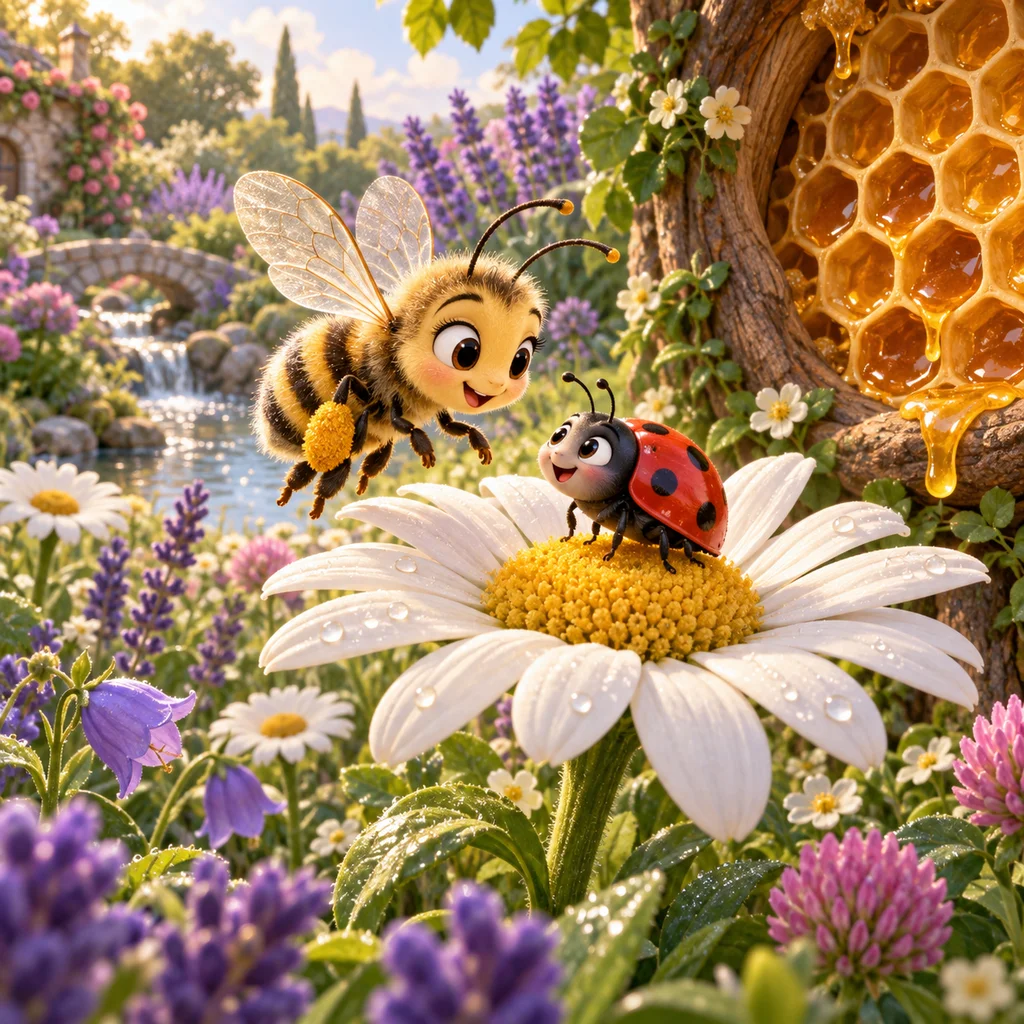
Bealandedonaflowerjustasaladybirdclimbedontoitsstem.Inthispretendgarden,insectscouldchat.‘Offtocollecthoney?’askedtheladybird.‘Notyet,’Beareplied.‘Flowersgivemenectar.There'smoreworktodobeforeit'shoney.’
Shesippedalittlenectarandstoreditinherspecialcarryingpouch.Thegardenwasbusywithnoddingstemsandrustlingleaves.Beavisitedmoreflowers,thenflewbacktowardthehive.Theladybirdstayedbehindtocountthepetalsonherfavoritedaisy.
Athome,otherworkerbeestooktheirturns.Tinyhelperscalledenzymeschangedsugarsinthenectar.Thebeesspreaditintothehoneycombandfannedtheirwings.Waterslowlyleftthenectarandwentintotheair.Whatremainedbecamethicker.
Beaimaginedeachwaxcellasalittlecupboard.Whenthehoneywasready,thebeesclosedcellswithwaxlids.Theirfoodwouldbetherewhenflowerswerehardertofind.Nobodyhadgonetoashop.Nobodyhadusedacookingpot.Manysmalljobshadmadeoneusefulmeal.
ThenexttimeBeavisitedthedaisy,theladybirdwaved.‘Didyourdeliveryarrive?’‘Itdid,’Beasaid.‘Aflowerhelped,andahivehelped.’Thenshetuckedherheadintoanotherblossom.Thegardenhadanewdeliverywaiting.
Free to read and listen · AI narration · No account needed
Read the full story
Bea landed on a flower just as a ladybird climbed onto its stem. In this pretend garden, insects could chat. ‘Off to collect honey?’ asked the ladybird. ‘Not yet,’ Bea replied. ‘Flowers give me nectar. There's more work to do before it's honey.’
She sipped a little nectar and stored it in her special carrying pouch. The garden was busy with nodding stems and rustling leaves. Bea visited more flowers, then flew back toward the hive. The ladybird stayed behind to count the petals on her favorite daisy.
At home, other worker bees took their turns. Tiny helpers called enzymes changed sugars in the nectar. The bees spread it into the honeycomb and fanned their wings. Water slowly left the nectar and went into the air. What remained became thicker.
Bea imagined each wax cell as a little cupboard. When the honey was ready, the bees closed cells with wax lids. Their food would be there when flowers were harder to find. Nobody had gone to a shop. Nobody had used a cooking pot. Many small jobs had made one useful meal.
The next time Bea visited the daisy, the ladybird waved. ‘Did your delivery arrive?’ ‘It did,’ Bea said. ‘A flower helped, and a hive helped.’ Then she tucked her head into another blossom. The garden had a new delivery waiting.
What we learned
Honey starts as flower nectar. Honeybees change it, remove water, and store it for food.