Maple's autumn surprise
Samknewthetreebesidethegate.Itslowestbranchlookedlikeacrookedelbow,anditsleavesmadegoodshadeforareadingrug.AllsummerSamcalleditthegreenumbrella.Oneautumnmorning,theumbrellahadayellowpatch.
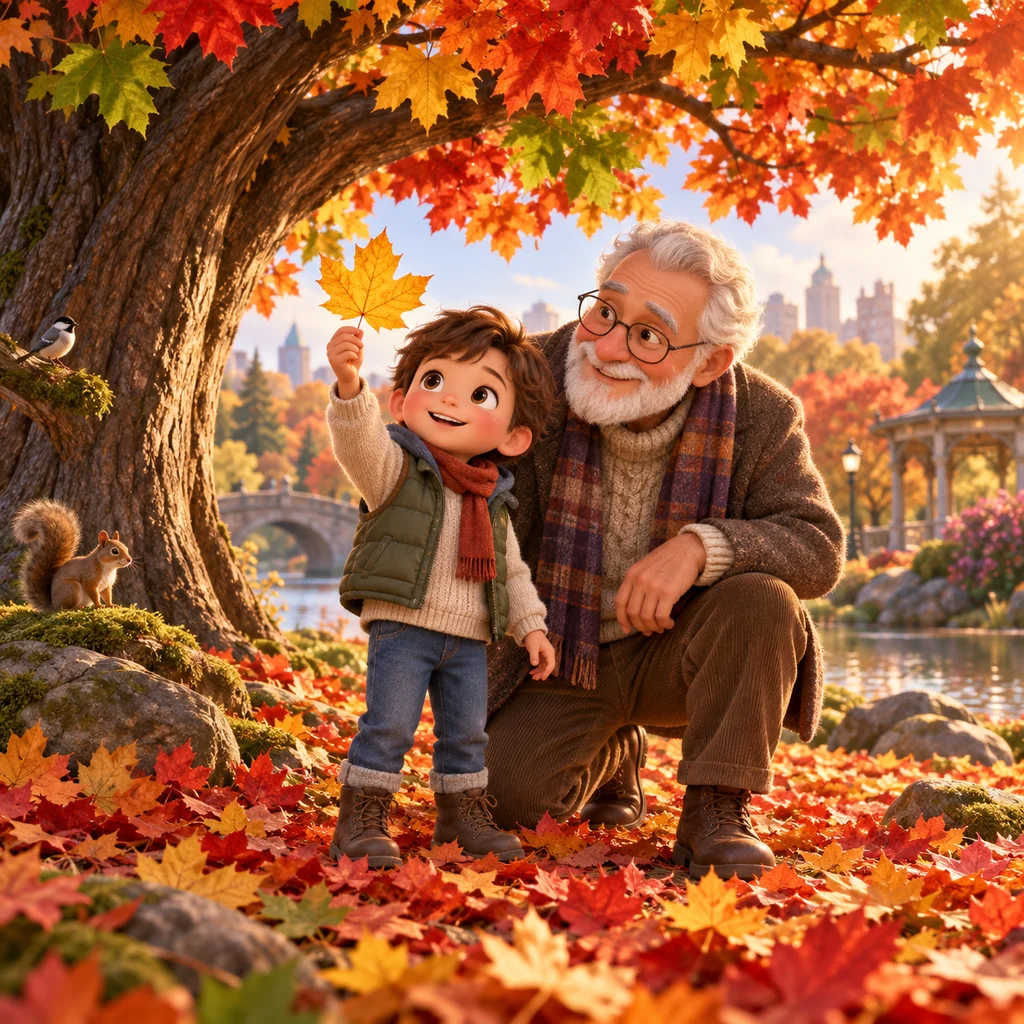
SamaskedGrandpawhethersomeonehadspilledpaint.Theyinspectedafallenleaftogether.Ithadgreennearthestemandgoldalonganedge.‘Leaveshavedifferentcolor-makingsubstances,’Grandpaexplained.‘Thegreenoneiscalledchlorophyll.Whenitfadesinautumn,someoftheothercolorscanshow.’
Samturnedtheleafover.‘Theyellowwastherealready?’‘Somecolorswere.Sometreesmakeredpigmentsinautumntoo.’Theylookeddownthestreet.Onetreewasgold,anotherreddish,andatallevergreenwasstillgreen.Treesdidnotallchangeinexactlythesameway.
Everyfewdays,Samdrewthetreefromthesamewindow.Thedrawingsbecamealittleflipbook:green,green-and-gold,thenbrancheswithfewerleaves.Samlikedthebarecrookedelbowtoo.Itwaseasiertospotthebirdsperchedthere.
AttheendofthebookSamwrote,‘Mytreechanges,butIknowit.’Grandpahelpedspell‘autumn.’Theyspreadthereadingrugindoorsbesidethewindow,wherethelastgoldleavescouldjointhestorywithoutcominginside.
Free to read and listen · AI narration · No account needed
Read the full story
Sam knew the tree beside the gate. Its lowest branch looked like a crooked elbow, and its leaves made good shade for a reading rug. All summer Sam called it the green umbrella. One autumn morning, the umbrella had a yellow patch.
Sam asked Grandpa whether someone had spilled paint. They inspected a fallen leaf together. It had green near the stem and gold along an edge. ‘Leaves have different color-making substances,’ Grandpa explained. ‘The green one is called chlorophyll. When it fades in autumn, some of the other colors can show.’
Sam turned the leaf over. ‘The yellow was there already?’ ‘Some colors were. Some trees make red pigments in autumn too.’ They looked down the street. One tree was gold, another reddish, and a tall evergreen was still green. Trees did not all change in exactly the same way.
Every few days, Sam drew the tree from the same window. The drawings became a little flipbook: green, green-and-gold, then branches with fewer leaves. Sam liked the bare crooked elbow too. It was easier to spot the birds perched there.
At the end of the book Sam wrote, ‘My tree changes, but I know it.’ Grandpa helped spell ‘autumn.’ They spread the reading rug indoors beside the window, where the last gold leaves could join the story without coming inside.
What we learned
When green chlorophyll fades, other leaf colors show. Some red pigments are made during autumn.