A goodnight turn for Earth
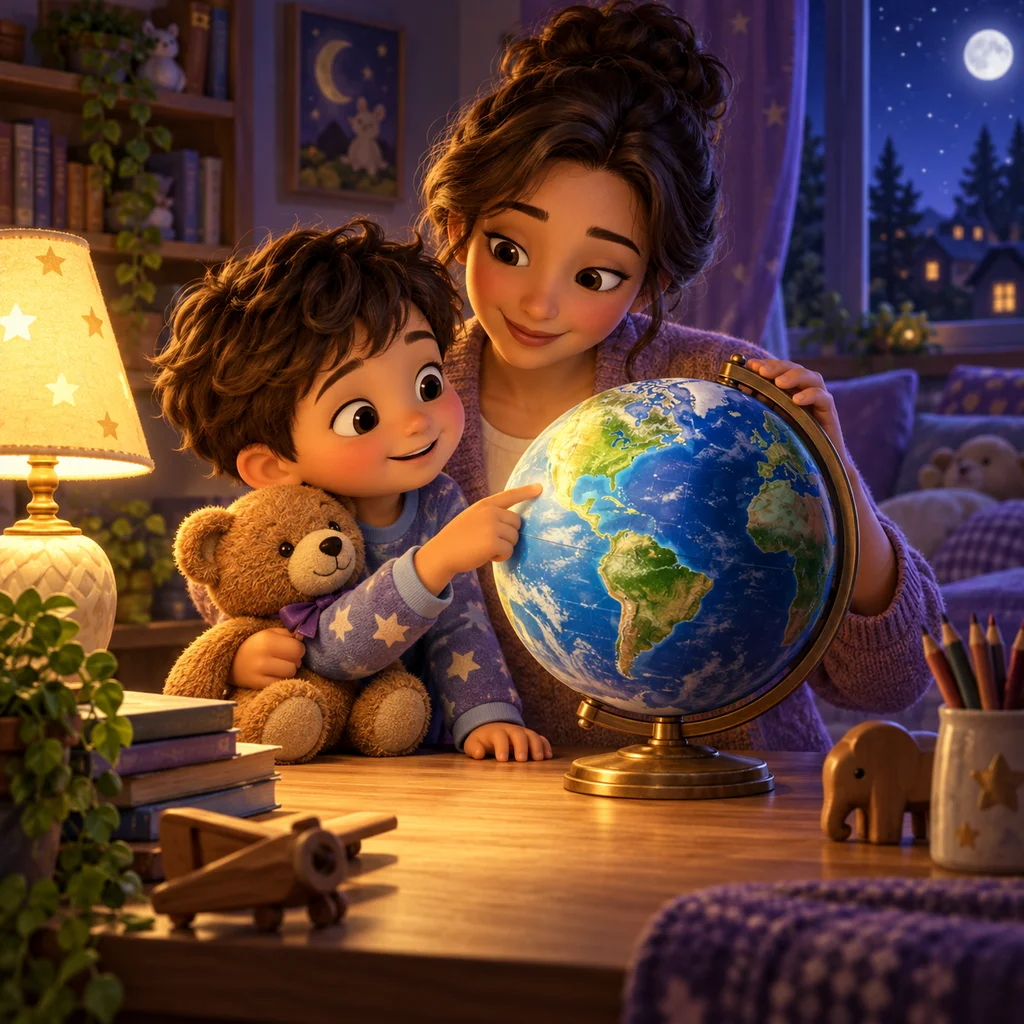
AmirtuckedTeddyintoashoeboxbed.Outside,thegardenwasgettingdark.‘Wheredoesthedaylightgo?’heasked.Mumbroughtoveraglobeandsetitnearalamp.‘Let'sgiveTeddyaverysmallEarthtovisit.’
Theyputapaperdotontheglobeforhome.ThelampstayedinoneplacewhileMumslowlyturnedtheglobe.Thedotmovedintothelight,thenaroundintoshadow.Amirturneditback.‘Morningagain!’hesaid.Teddyhadapparentlysleptthroughawholetinynight.
‘Earthisturningtoo,’Mumexplained.‘WegetdaylightwhenourpartfacestheSun.Wegetnightwhenitturnsaway.’Amirlookedoutatthequietgarden.Itdidn'tfeelasthoughhewasmoving.Butthemodelhelpedhimpicturetheenormous,steadyturn.
Theytriedanotherdotonthefarsideoftheglobe.Whenhomewasdark,thatdotwasinthelight.Amirimaginedsomeoneeatingbreakfastwhilehebrushedhisteeth.Perhapstheirteddywasjustgettingoutofbed.Helikedthethoughtofmorningbeingsomewhere,evenathisbedtime.
Mumswitchedoffthemodel'slampandleftAmir'snight-lighton.HesettledTeddybeneathafoldedsockblanket.‘Goodnightfromourside,’hewhispered.Earthwouldkeepturningwhiletheyrested.Therewasnoneedforeitherofthemtostayawakeandpush.
Free to read and listen · AI narration · No account needed
Read the full story
Amir tucked Teddy into a shoebox bed. Outside, the garden was getting dark. ‘Where does the daylight go?’ he asked. Mum brought over a globe and set it near a lamp. ‘Let's give Teddy a very small Earth to visit.’
They put a paper dot on the globe for home. The lamp stayed in one place while Mum slowly turned the globe. The dot moved into the light, then around into shadow. Amir turned it back. ‘Morning again!’ he said. Teddy had apparently slept through a whole tiny night.
‘Earth is turning too,’ Mum explained. ‘We get daylight when our part faces the Sun. We get night when it turns away.’ Amir looked out at the quiet garden. It didn't feel as though he was moving. But the model helped him picture the enormous, steady turn.
They tried another dot on the far side of the globe. When home was dark, that dot was in the light. Amir imagined someone eating breakfast while he brushed his teeth. Perhaps their teddy was just getting out of bed. He liked the thought of morning being somewhere, even at his bedtime.
Mum switched off the model's lamp and left Amir's night-light on. He settled Teddy beneath a folded sock blanket. ‘Goodnight from our side,’ he whispered. Earth would keep turning while they rested. There was no need for either of them to stay awake and push.
What we learned
Earth's rotation brings our part of the world into sunlight and then away from it.